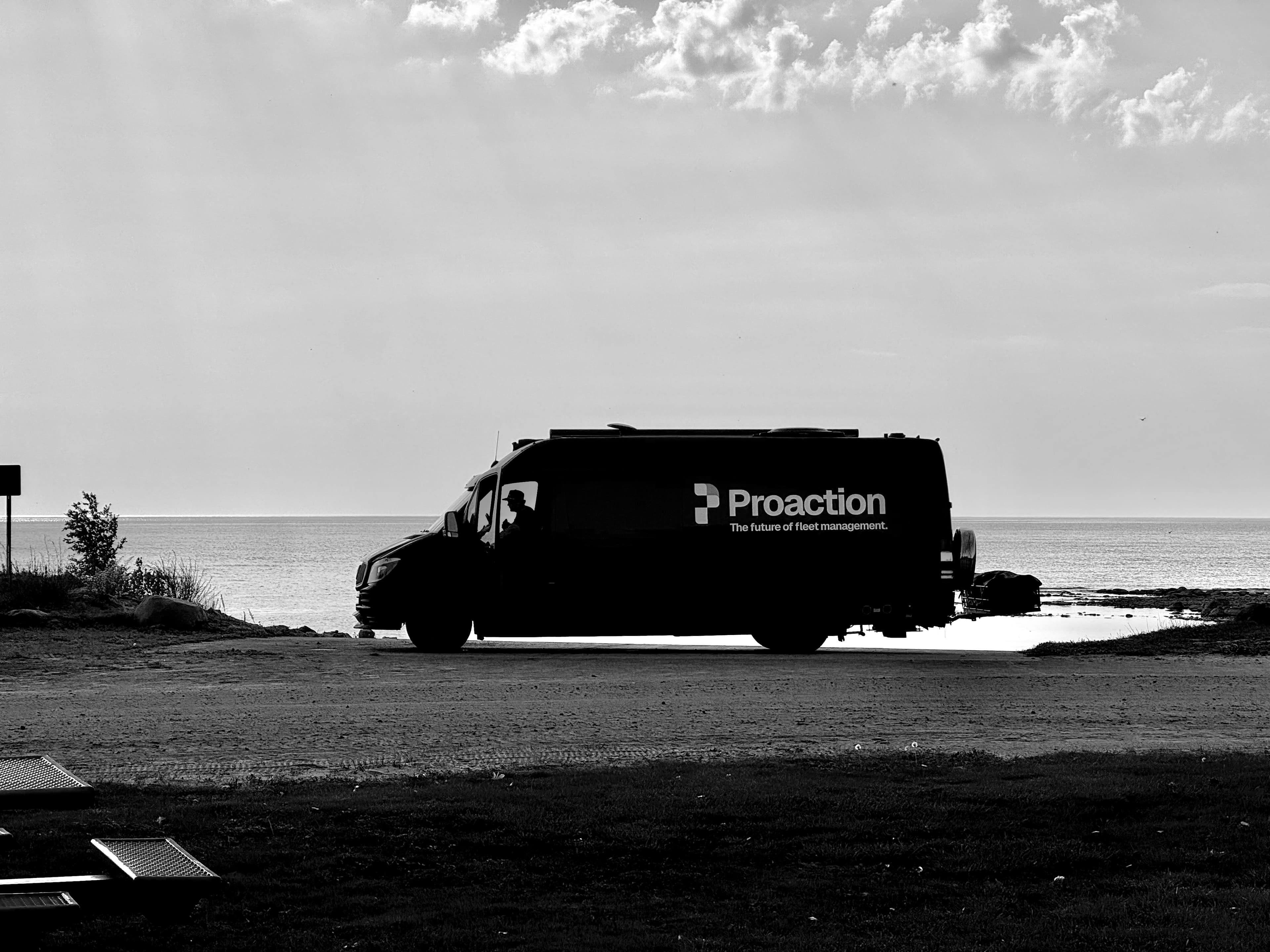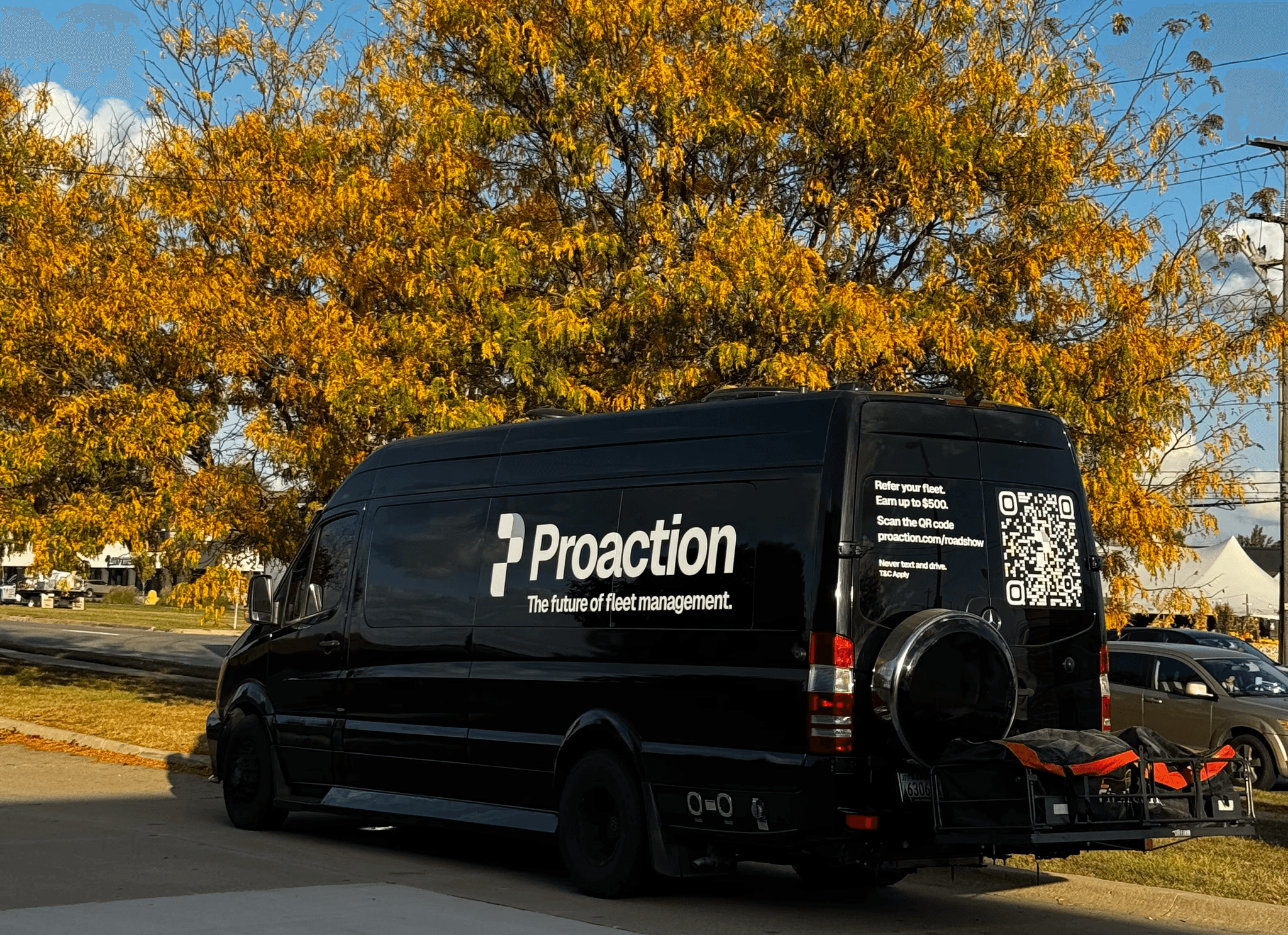
After thousands of miles, dozens of fleet visits, and countless conversations, the Proaction Roadshow has officially wrapped.
From Kansas City to Detroit, one theme kept coming up: fleets are rethinking how they operate. Technology is no longer a nice-to-have or a set of disconnected tools. It is becoming the core of how fleet teams make decisions, collaborate, and take action every day.
Here are some of the biggest takeaways from our time on the road.
1. Relationships still drive results.
For all the talk about automation and data-driven operations, nothing replaces sitting across from someone, seeing their process, and hearing their pain points firsthand. The power of in-person connection came through loud and clear on this roadshow. Stronger technology starts with stronger relationships, and the best insights often come from simple conversations on the ground.
2. Fleets are connecting what matters and modernizing what does not.
Across the industry, consolidation is reshaping how companies think about technology. As organizations grow, they often end up with a dozen disconnected tools: one for maintenance, one for telematics, one for reporting, and a browser full of open tabs.
On the road, we heard a common theme. Fleets want all of this connected. Outdated tools that no longer serve their purpose are being replaced with modern ones that offer deeper visibility and automation. But for systems that cannot be easily swapped out, especially legacy tools controlled by other departments or external vendors, the goal is integration, not disruption.
Fleet leaders are starting to expect both. They want the ability to bring all their critical data together while keeping their operations running smoothly. It is not about replacing everything. It is about unifying everything that matters.
3. Convenience and control do not have to be a trade-off.
For years, fleets have leaned on managed services to simplify operations. But now, more and more teams are questioning if that convenience is worth the cost and lack of control.
With new tools and automation, fleets no longer have to choose between efficiency and independence. Modern platforms can replicate the convenience of managed services by automating workflows, tracking service needs, and consolidating reporting, while putting teams fully back in the driver’s seat.
This shift is not about cutting ties. It is about gaining flexibility, visibility, and cost efficiency. Many fleets we spoke to are reevaluating whether external management is still the right fit, especially as new technology makes it easier to manage operations in-house. In a time when every line item matters, that conversation is becoming much more common.
4. Fleets want inspection consistency, not complexity.
Fixed camera systems sound great on paper, but they do not always fit real-world operations. Weather, lighting, and workflow challenges can easily throw them off. Fleets are asking how to make inspections consistent and automated without slowing anyone down. The goal is not just automation. It is giving operators and drivers a process that works reliably every time, regardless of where they are.
The takeaway from the road is simple: fleets want control, context, and confidence. They want to know where their vehicles are, what they are costing, and what is coming next. And they want technology that makes that visibility effortless.
To everyone we met along the way, thank you for opening your doors, sharing your insights, and helping us keep building better tools for the people who keep fleets moving.
💡
If you're interested in improving your fleet technology, please schedule a demo below!