Our Story
Proaction started on a couch in Phoenix.
In early 2024, our founders were working with a rental operation when they noticed something familiar: teams yelling across the warehouse, tracking assets on whiteboards, sticky notes, and spreadsheets. It was chaos. And it was everywhere.
Drake Bauer and Colin Knudsen had been introduced through a mutual friend years earlier. Both had spent time in mobility-focused startups, and had collectively owned over 150 cars. They knew the space. Shortly after, they met Jamie Rotbert, who brought a different lens: an engineering background at GE building wind turbines and working on energy systems. Together, they saw an opportunity to build technology that molded to how an operation worked, not forcing an operation to mold to a piece of software.
They started scrappy, building on Airtable, learning from customers, and bootstrapping for about six months. Then a chance introduction to a local trucking organization in the Midwest opened their eyes. The same pain points they had seen in car rental were showing up everywhere: fragmented tools, manual processes, and reactive workflows.
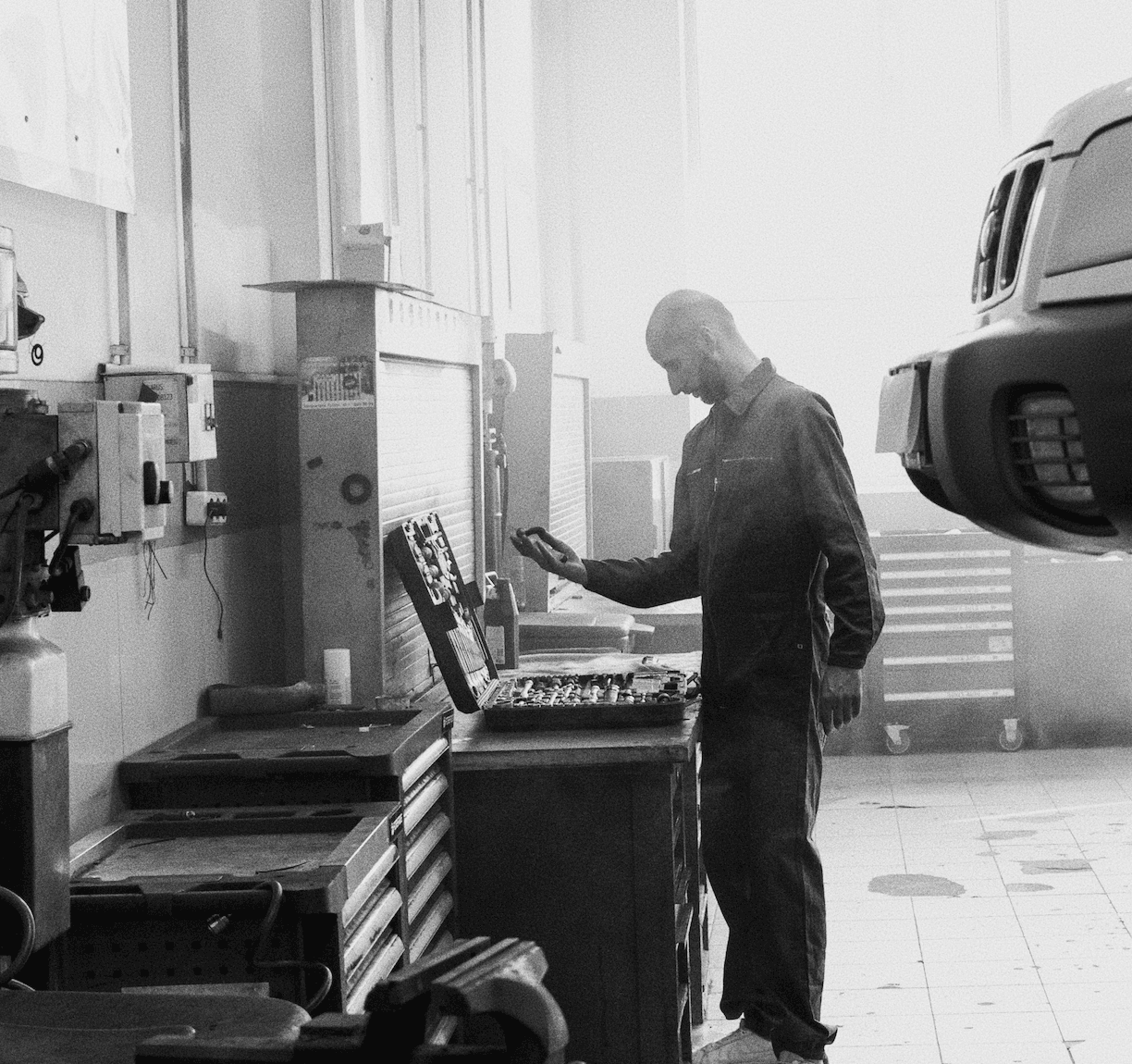
And it wasn't just vehicles on the road. Excavators, generators, and other expensive assets all need service, preventative maintenance, daily tracking, and total cost of ownership visibility. What started as a car-focused product quickly became something bigger – fleets of commercial assets.
Originally called Flete, the company quickly ran into a problem: saying "Flete" and "fleet" in the same sentence was confusing. Customers and investors started calling us "Getflete" just to avoid the awkwardness. By mid-2025, it was clear a name change was needed.
The new name came from a simple realization: fleets don't need another system of record. They need a system of action. But as we worked alongside more fleet teams, we learned that visibility alone was not enough. Customers also needed a better way to get the work done without adding headcount or handing every program to an expensive, opaque provider.
Today, Proaction is building a modern alternative to legacy fleet management services. Every customer gets one platform to track, automate, and report on fleet programs across maintenance, rentals, tolls, citations, claims, registration, field work, and more. When it makes sense, customers can add Proaction Fleet Programs and let us handle select programs on their behalf.
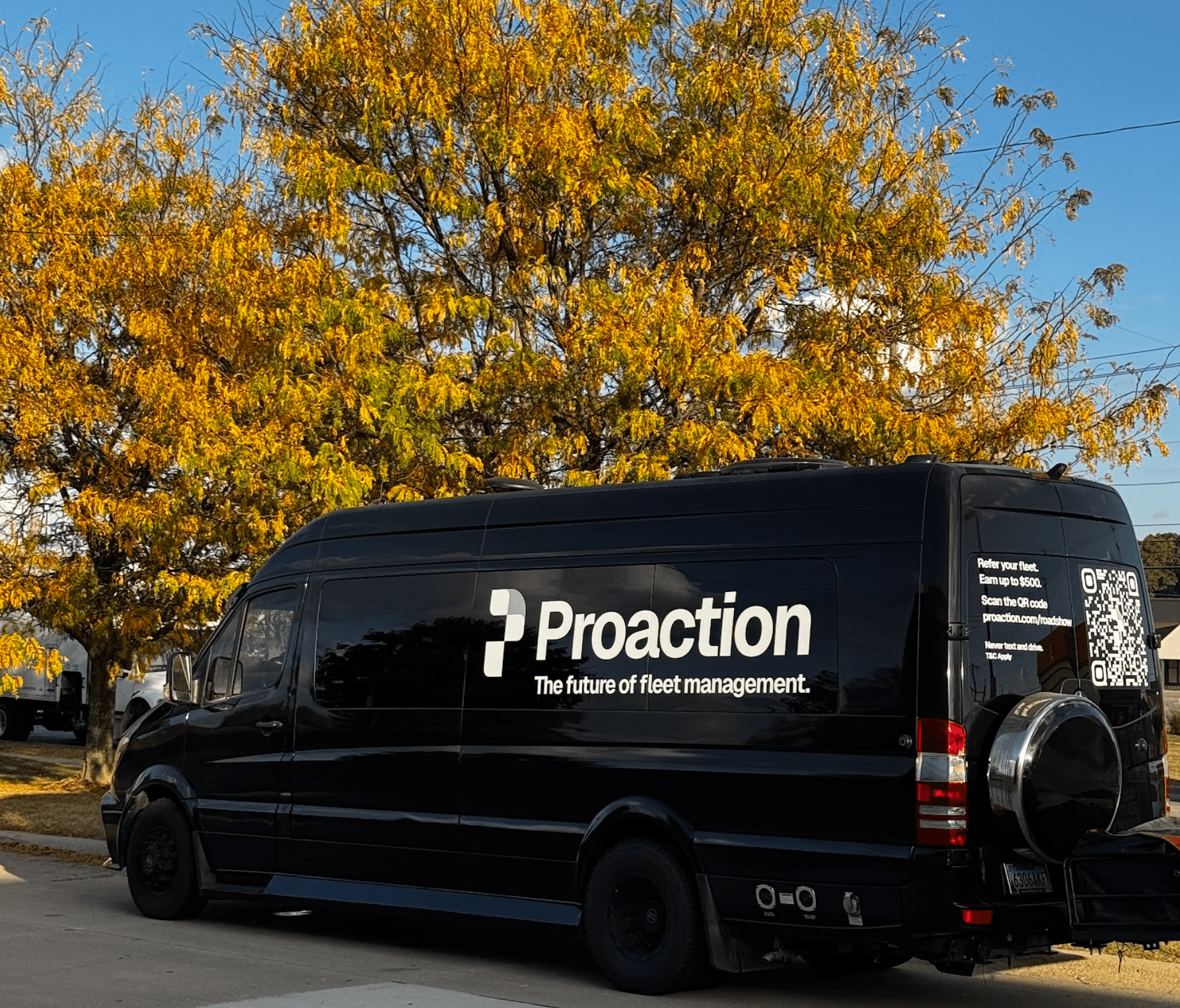
Legacy FMCs were built around layers of people, disconnected systems, and limited visibility. With $4.2 million in funding, Proaction is accelerating the modern software, AI, and human oversight behind a more efficient model. Fleets can start with one program, prove the savings, and expand over time, with clearer visibility, faster execution, and a fraction of the traditional cost.
Our Story
Proaction started on a couch in Phoenix.
In early 2024, our founders were working with a rental operation when they noticed something familiar: teams yelling across the warehouse, tracking assets on whiteboards, sticky notes, and spreadsheets. It was chaos. And it was everywhere.
Drake Bauer and Colin Knudsen had been introduced through a mutual friend years earlier. Both had spent time in mobility-focused startups, and had collectively owned over 150 cars. They knew the space. Shortly after, they met Jamie Rotbert, who brought a different lens: an engineering background at GE building wind turbines and working on energy systems. Together, they saw an opportunity to build technology that molded to how an operation worked, not forcing an operation to mold to a piece of software.
They started scrappy, building on Airtable, learning from customers, and bootstrapping for about six months. Then a chance introduction to a local trucking organization in the Midwest opened their eyes. The same pain points they had seen in car rental were showing up everywhere: fragmented tools, manual processes, and reactive workflows.
And it wasn't just vehicles on the road. Excavators, generators, and other expensive assets all need service, preventative maintenance, daily tracking, and total cost of ownership visibility. What started as a car-focused product quickly became something bigger – fleets of commercial assets.
Originally called Flete, the company quickly ran into a problem: saying "Flete" and "fleet" in the same sentence was confusing. Customers and investors started calling us "Getflete" just to avoid the awkwardness. By mid-2025, it was clear a name change was needed.
The new name came from a simple realization: fleets don't need another system of record. They need a system of action. But as we worked alongside more fleet teams, we learned that visibility alone was not enough. Customers also needed a better way to get the work done without adding headcount or handing every program to an expensive, opaque provider.
Today, Proaction is building a modern alternative to legacy fleet management services. Every customer gets one platform to track, automate, and report on fleet programs across maintenance, rentals, tolls, citations, claims, registration, field work, and more. When it makes sense, customers can add Proaction Fleet Programs and let us handle select programs on their behalf.
Legacy FMCs were built around layers of people, disconnected systems, and limited visibility. With $4.2 million in funding, Proaction is accelerating the modern software, AI, and human oversight behind a more efficient model. Fleets can start with one program, prove the savings, and expand over time, with clearer visibility, faster execution, and a fraction of the traditional cost.
Our Story
Proaction started on a couch in Phoenix.
In early 2024, our founders were working with a rental operation when they noticed something familiar: teams yelling across the warehouse, tracking assets on whiteboards, sticky notes, and spreadsheets. It was chaos. And it was everywhere.
Drake Bauer and Colin Knudsen had been introduced through a mutual friend years earlier. Both had spent time in mobility-focused startups, and had collectively owned over 150 cars. They knew the space. Shortly after, they met Jamie Rotbert, who brought a different lens: an engineering background at GE building wind turbines and working on energy systems. Together, they saw an opportunity to build technology that molded to how an operation worked, not forcing an operation to mold to a piece of software.
They started scrappy, building on Airtable, learning from customers, and bootstrapping for about six months. Then a chance introduction to a local trucking organization in the Midwest opened their eyes. The same pain points they had seen in car rental were showing up everywhere: fragmented tools, manual processes, and reactive workflows.
And it wasn't just vehicles on the road. Excavators, generators, and other expensive assets all need service, preventative maintenance, daily tracking, and total cost of ownership visibility. What started as a car-focused product quickly became something bigger – fleets of commercial assets.
Originally called Flete, the company quickly ran into a problem: saying "Flete" and "fleet" in the same sentence was confusing. Customers and investors started calling us "Getflete" just to avoid the awkwardness. By mid-2025, it was clear a name change was needed.
The new name came from a simple realization: fleets don't need another system of record. They need a system of action. But as we worked alongside more fleet teams, we learned that visibility alone was not enough. Customers also needed a better way to get the work done without adding headcount or handing every program to an expensive, opaque provider.
Today, Proaction is building a modern alternative to legacy fleet management services. Every customer gets one platform to track, automate, and report on fleet programs across maintenance, rentals, tolls, citations, claims, registration, field work, and more. When it makes sense, customers can add Proaction Fleet Programs and let us handle select programs on their behalf.
Legacy FMCs were built around layers of people, disconnected systems, and limited visibility. With $4.2 million in funding, Proaction is accelerating the modern software, AI, and human oversight behind a more efficient model. Fleets can start with one program, prove the savings, and expand over time, with clearer visibility, faster execution, and a fraction of the traditional cost.
Our Story
Proaction started on a couch in Phoenix.
In early 2024, our founders were working with a rental operation when they noticed something familiar: teams yelling across the warehouse, tracking assets on whiteboards, sticky notes, and spreadsheets. It was chaos. And it was everywhere.
Drake Bauer and Colin Knudsen had been introduced through a mutual friend years earlier. Both had spent time in mobility-focused startups, and had collectively owned over 150 cars. They knew the space. Shortly after, they met Jamie Rotbert, who brought a different lens: an engineering background at GE building wind turbines and working on energy systems. Together, they saw an opportunity to build technology that molded to how an operation worked, not forcing an operation to mold to a piece of software.
They started scrappy, building on Airtable, learning from customers, and bootstrapping for about six months. Then a chance introduction to a local trucking organization in the Midwest opened their eyes. The same pain points they had seen in car rental were showing up everywhere: fragmented tools, manual processes, and reactive workflows.
And it wasn't just vehicles on the road. Excavators, generators, and other expensive assets all need service, preventative maintenance, daily tracking, and total cost of ownership visibility. What started as a car-focused product quickly became something bigger – fleets of commercial assets.
Originally called Flete, the company quickly ran into a problem: saying "Flete" and "fleet" in the same sentence was confusing. Customers and investors started calling us "Getflete" just to avoid the awkwardness. By mid-2025, it was clear a name change was needed.
The new name came from a simple realization: fleets don't need another system of record. They need a system of action. But as we worked alongside more fleet teams, we learned that visibility alone was not enough. Customers also needed a better way to get the work done without adding headcount or handing every program to an expensive, opaque provider.
Today, Proaction is building a modern alternative to legacy fleet management services. Every customer gets one platform to track, automate, and report on fleet programs across maintenance, rentals, tolls, citations, claims, registration, field work, and more. When it makes sense, customers can add Proaction Fleet Programs and let us handle select programs on their behalf.
Legacy FMCs were built around layers of people, disconnected systems, and limited visibility. With $4.2 million in funding, Proaction is accelerating the modern software, AI, and human oversight behind a more efficient model. Fleets can start with one program, prove the savings, and expand over time, with clearer visibility, faster execution, and a fraction of the traditional cost.